
D4DJ Groovy Mix
Donuts Co. Ltd.Music
4.71.86K Reviews
- Version
- 10.6.00
- Installs
- 1.00M
- Age Rating
- Everyone
Screenshots
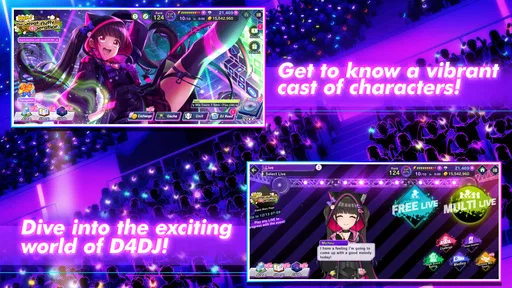
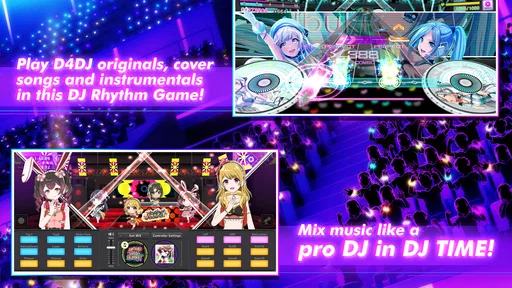
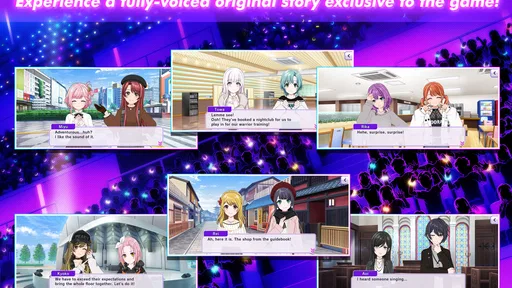
Our Review of D4DJ Groovy Mix
 Analysis by Appyee
I treat D4DJ Groovy Mix as a game to try for its music and rhythm play, not as a purchase I need to commit to up front. It is free to download, so I can see whether its DJ presentation, songs, and note patterns suit me before spending anything. The important distinction is that free access does not mean every optional purchase is free: in-app items range from $0.99 to $169.99 each, a wide span that makes it sensible to check what an item offers and whether I actually want it before buying.
What the free entry is worth
For me, the strongest value is the chance to test the central rhythm-game loop without an upfront price. If I enjoy following the beat, learning patterns, and returning to songs to improve, that gives the game a useful role as a regular music break. If the first sessions do not click, I can walk away without having paid an entry fee. I would not assume that free access means every song, story segment, or progression option is available in the same way, though; I would judge the experience by what I can actually play rather than treating the download price as a promise of unlimited access.
The purchase range also calls for a deliberate approach. A low-priced item may feel like a modest extra, while the upper end is a much larger commitment, so I would avoid buying anything simply because it appears during a burst of enthusiasm. First, I would play long enough to know which parts I use most: the music, the story, or the competitive side. That makes any later spending a choice tied to a real preference rather than a guess about what might improve the game.
Getting Into the Groove
So, what’s the deal with D4DJ Groovy Mix? It’s a rhythm game that’s not just about hitting notes in time with the music. You get to dive into a vibrant DJ world filled with energetic tunes and colorful characters. The game is developed by Bushiroad, the same folks who brought you the popular BanG Dream! series, so you know it's got some serious rhythm game pedigree.
The Gameplay Experience
Let’s talk gameplay. The controls are super intuitive. You’ll be tapping, sliding, and holding notes as they fall towards the bottom of your screen. It starts off pretty easy, but don’t let that fool you. Things get trickier as you level up, with more complex beats and faster tempos. It’s the kind of challenge that keeps you coming back for more.
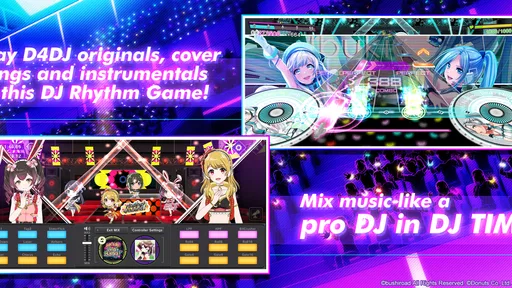
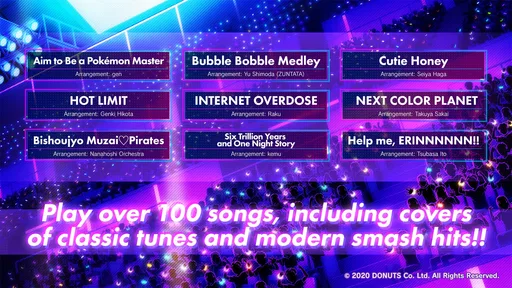
Oh, and did I mention the music? The game features a mix of original tracks and some killer remixes of popular songs. Whether you’re into J-Pop, EDM, or something in between, there’s something here for everyone. The tracklist is constantly expanding, so there’s always something fresh to jam to.
Making the most of a short session
A rhythm game is easiest to enjoy when I give it a little attention rather than trying to play while doing something else. A practical routine is to pick one song, play it once to get the feel of the arrangement, then replay it with my eyes on the note lanes instead of the effects. If a section keeps tripping me up, I can treat that as a pattern to learn rather than a reason to raise the difficulty immediately. This kind of focused practice is especially useful on a phone, where a small screen and hurried taps can make timing feel less predictable.
I would also use headphones when I can, but I would keep the volume comfortable and avoid playing in situations where I need to hear what is happening around me. Music games reward attention, and tapping through a dense passage while walking or distracted is a poor trade: it is less enjoyable and easier to make mistakes. At home, a few focused attempts can be a satisfying break; during a commute, I would only play if I can sit safely and give the screen my attention.
Characters and Storyline
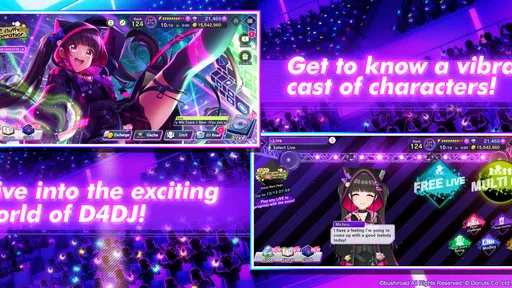
Now, onto the characters. One of the coolest aspects of the game is its cast of DJs. Each character is part of a unit, and they all have their own unique personalities and backstories. You’ll find yourself drawn into their world, following their stories and watching them grow as artists. It adds a nice layer of depth beyond just the rhythm gameplay.
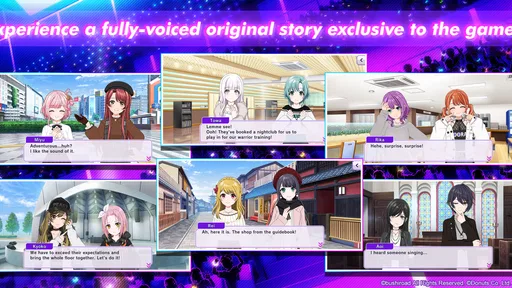
The storyline is told through a mix of visual novel-style segments and animated scenes. It’s engaging and often quite funny, providing plenty of motivation to keep playing and unlocking more of the story. Plus, the voice acting is top-notch, bringing each character to life in a way that’s both endearing and entertaining.
Story first, score first, or both?
I see the story and the note charts as two different reasons to stay. If I care about the cast, the character scenes give a session a sense of continuity that a song-select screen alone cannot provide. If I mainly want to practice, I can focus on replaying tracks and improving my timing without treating every story segment as homework. That flexibility matters: people who dislike dialogue-heavy interruptions may prefer to concentrate on songs, while readers who enjoy character-driven scenes can take their time and let the narrative shape their pace.
One useful way to decide whether the story is for me is to sample it in small pieces rather than expecting the opening to sell the entire cast immediately. I would pay attention to whether a unit’s dynamic makes me curious about the next scene. If it does, story progress becomes a natural reason to return; if not, the music can still be the main attraction. I would not choose the game solely because it has characters, though—the rhythm play needs to feel enjoyable on its own for the long-term loop to work.
Aesthetic Appeal
Let’s not forget about the visuals. The game is downright gorgeous. The interface is sleek and colorful, perfectly matching the energetic vibe of the game. The character designs are detailed and expressive, making each DJ feel distinct and memorable. It’s a feast for the eyes, especially when you’re in the middle of a particularly intense track and the screen lights up with effects.
Keeping the screen readable
The visual energy is part of the appeal, but it can compete with the notes when I am trying to improve. When a chart feels difficult, my first move would be to focus on the lanes and the timing cues rather than watching the surrounding animation. I would also test the game in the lighting where I usually play: a display that feels vivid in a dim room may be harder to read outdoors. The practical trade-off is simple—effects make a performance feel lively, but clean attention to the note patterns matters more when accuracy is the goal.
That is one reason I would not judge my ability from a single first attempt. A miss can come from unfamiliarity with a song, visual distraction, or rushing the pattern, not necessarily from a lack of rhythm. Replaying a track after I recognize its musical phrasing can make the chart easier to follow. If I still find the on-screen action tiring, a less visually busy rhythm game may suit me better, even if this one’s presentation is more distinctive.
Playing with Friends
If you’re the competitive type, you’re in luck. D4DJ Groovy Mix has a multiplayer mode where you can team up with friends or face off against other players. It adds a social element that’s a ton of fun, especially when you’re trying to outscore your buddies. You can also join clubs, which offer additional rewards and community events to dive into.
Where it sits among rhythm games
Compared with a straightforward rhythm game built almost entirely around selecting a track and chasing a better score, this one has more going on around the songs: a DJ-themed cast, story scenes, and social play. That makes it a better fit for me when I want a world to return to as well as a timing challenge. The trade-off is that someone who wants nothing but a clean, immediate score-chasing loop may find the surrounding character and community elements less appealing than a more stripped-back alternative.
It is also a different kind of choice from simply playing music in a streaming app. Listening lets me relax without watching a screen; this asks me to interact with the beat and react to patterns. I would pick it when I want active play, not when I just want background music while reading or working. A realistic use is a short evening session: I can choose a track, focus on the chart, then spend a little time with a story scene or check in with the social side if that is what I feel like. That is more satisfying than opening it in the middle of another task and dividing my attention.
Who is likely to get the most from it?
I would recommend giving it a try if you enjoy Japanese pop or electronic-leaning music, like tapping through increasingly involved patterns, or want character stories alongside your rhythm sessions. The combination is its particular appeal; it is not just a music player with buttons, nor only a visual story with songs in the background. A player who likes both collecting a feel for a track and revisiting it to improve may get a lot out of the format without needing to make every session competitive.
I would be more cautious if I mainly want a quiet, hands-off way to hear songs, have little interest in anime-style characters, or dislike visual effects during play. It may also be a poor match if I want an entirely self-contained experience with no optional spending to consider. Since the game is free to start, though, trying it briefly is a reasonable way to answer the most important question for myself: do the songs and note patterns feel fun enough to keep opening it?
Practical details before installing
Donuts Co. Ltd. is the developer, and the game is listed as suitable for everyone. It is free, with optional in-app purchases priced from $0.99 to $169.99 per item, so I would treat spending as a separate decision from downloading. Its current version is 9.4.10 and it requires Android 6.0 or later. The game has a 4.7 average from around 36,000 ratings, with more than a million installs; those figures suggest it has found a substantial audience, but they cannot tell me whether its particular mix of songs, story, and rhythm play will suit my taste.
Before installing, I would check that my device meets the Android requirement and that I am comfortable with a game built around frequent visual and musical attention. Once it is on my phone, I would start with a manageable chart, learn how the controls feel, and only then decide whether to explore story progress, multiplayer, or clubs. If a purchase becomes tempting, I would pause and ask whether it solves something I actually want from the game; the broad price range makes that small check worthwhile.
Final Thoughts
All in all, if you’re a fan of rhythm games or just looking for something new to try, D4DJ Groovy Mix is definitely worth checking out. It’s got the tunes, the challenge, and the charm to keep you entertained for hours on end. So, grab your headphones, crank up the volume, and get ready to groove!
My verdict is to try it if the blend of music, anime-style characters, and active note play sounds appealing, while keeping optional purchases firmly optional until I know what I value. Its free entry makes that trial easy, and its mix of solo practice, story, and social play gives it more than one way to hold my interest. I would skip it if I want a no-distraction music app or a bare-bones score challenge, but for an engaged rhythm-game session with a distinct DJ identity, it is an easy recommendation to test for myself.
Verdict
Strengths of D4DJ Groovy Mix
- Engaging rhythm gameplay with vibrant visuals.
- Wide variety of popular music tracks available.
- Regular updates with new content and events.
- Customizable characters and outfits enhance fun.
- User-friendly interface for easy navigation.
Limitations of D4DJ Groovy Mix
- Requires internet connection to play.
- In-app purchases can be pricey.
- Occasional lag on older devices.
- Limited offline content availability.
- High storage space requirement.
Similar Picks in This Category
View All
Tiles Hop Music & Ball Game
AMANOTES PTE. LTD.4.3

Magic Tiles 3™ - Piano Game
AMANOTES PTE. LTD.4.6

Real Piano
Bilkon3.7

Piano Game: Classic Music Song
Dream Tiles Piano Game Studio4.0

Smash Colors: Music Ball Rush
BADSNOWBALL HONGKONG LIMITED4.2

Piano Music Go-EDM Piano Games
Joy Journey Music Games4.5
Frequently Asked Questions
What is D4DJ Groovy Mix?
D4DJ Groovy Mix is a rhythm game that combines music and DJing elements, offering players an immersive experience with tracks from various genres. Players can enjoy a variety of songs and participate in events while interacting with characters from the D4DJ universe. It's available on both Android and iOS platforms.
How do I play D4DJ Groovy Mix?
In D4DJ Groovy Mix, players tap, hold, and slide notes in time with the music to score points. The game features a unique control scheme that simulates DJ turntables, adding a layer of complexity. Players can also customize their decks with different characters, each offering unique skills to enhance gameplay.
What are the key features of D4DJ Groovy Mix?
Key features of D4DJ Groovy Mix include a wide variety of music tracks, engaging storylines, and character customization. The game offers both solo and multiplayer modes, allowing players to compete with others. Events and collaborations with popular artists and franchises keep the content fresh and exciting.
Are there any in-app purchases in D4DJ Groovy Mix?
Yes, D4DJ Groovy Mix includes in-app purchases. Players can buy diamonds, the game's premium currency, to obtain new characters, outfits, and other items. While it's possible to enjoy the game without spending money, purchases can enhance the experience and help progress more quickly.
Is D4DJ Groovy Mix suitable for all ages?
D4DJ Groovy Mix is generally suitable for players of all ages. However, it is recommended for ages 12 and up due to some complex gameplay mechanics and in-app purchases. The game features colorful visuals and engaging content that can be enjoyed by both young players and adults.
Play our best games!


